
Ballad Health's Clinical Council leverages the expertise of physician leaders and frontline clinicians.
The new CMO of Ballad Health's Johnson City Medical Center brings a wealth of experience to the role, including serving as chair of the health system's Clinical Council.
Elizabeth Jackson, MD, MBA, became CMO of the Johnson City, Tennessee, hospital this month. Before taking on her new role, Jackson served as CMO of Ballad Health's Holston Valley Medical Center and Indian Path Community Hospital.
Ballad Health's Clinical Council is physician-led, with several sub-committees in areas such as pharmacy, perioperative care and surgery, and women and children.
"All of the sub-committees have a charter and are united in providing evidence-based care with high quality," Jackson says. "They also are focused on providing high-value care."
The Clinical Council's sub-committees look for opportunities to improve quality, reduce costs, and promote value-based care.
"The sub-committees meet individually and reach out to physicians and other stakeholders across the health system," Jackson says. "They look at areas that either need to be addressed because we have identified opportunities for improvement or have opportunities for growth that are shown in the latest literature."
The sub-committees share their recommendations at the monthly Clinical Council meetings.
"When their recommendations are endorsed by the council, the recommendations are shared with the medical executive committees at the health system's facilities," Jackson says. "The Clinical Council is a way to impact patient care at a wide level, not just at one facility."
Each sub-committee has the responsibility to address quality and cost evaluation.
"For example, the perioperative and surgical sub-committee reviews factors such as patient safety indicators and surgical site infections to identify opportunities to make changes," Jackson says. "That sub-committee recommended the Enhanced Recovery After Surgery program, which promotes decreased complications, reduced length of stay, and consistent care. This program has driven quality and reduced cost of care."
The sub-committees reach out to the health system's facilities to have frontline physicians participate in their work.
"The frontline physicians help make changes to policies and incentives as well as to promote initiatives," Jackson says. "In this way, the Clinical Council is not only getting the expertise of physicians on its sub-committees but also physicians who are practicing on the frontlines."
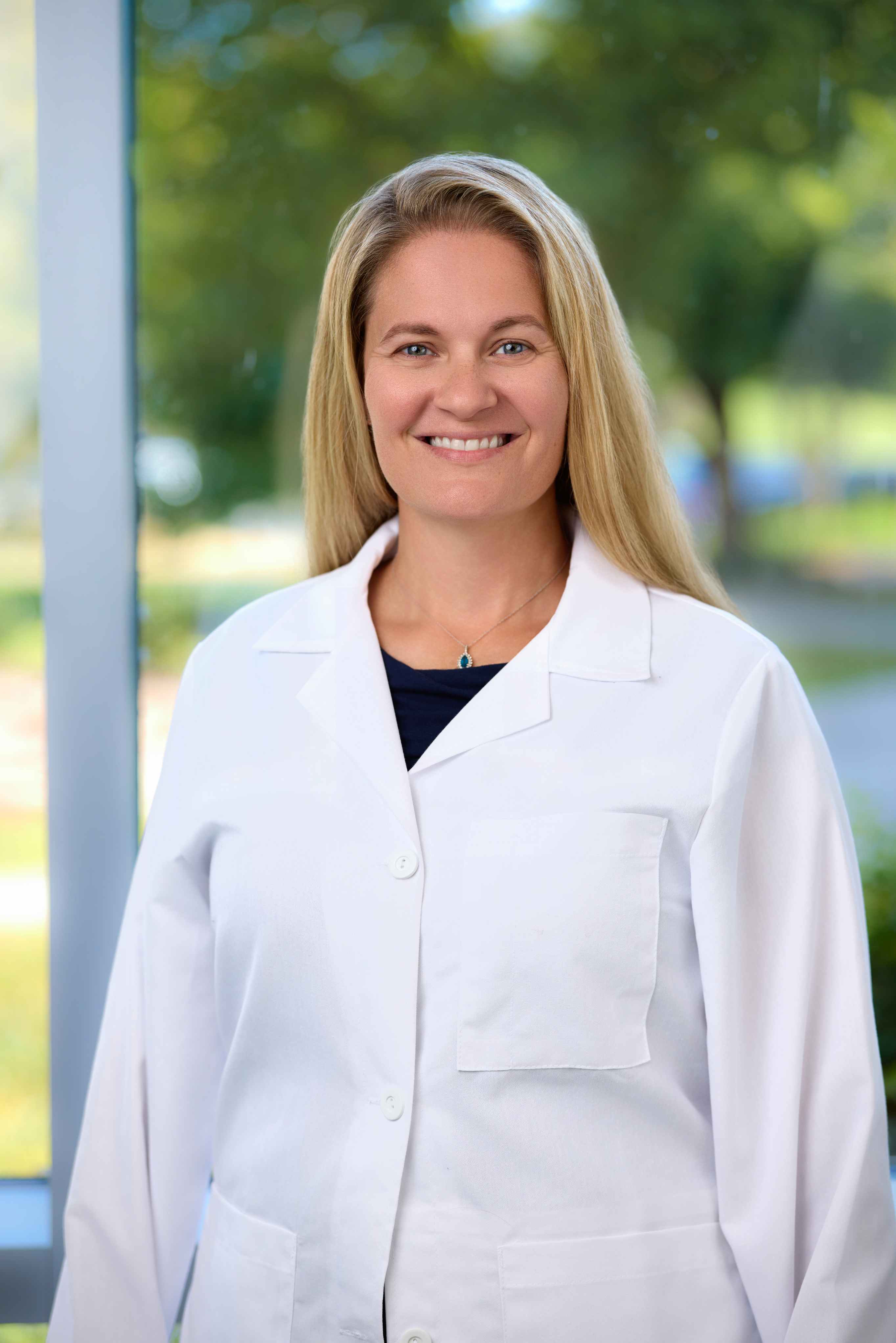 Elizabeth Jackson, MD, MBA, is CMO of Johnson City Medical Center. Photo courtesy of Ballad Health.
Managing hospital strategic growth
For CMOs and other leaders, a key to success in hospital strategic growth is identifying and publicizing what your facility does well, according to Jackson.
"Oftentimes, we do not capitalize on the services we offer at a hospital," Jackson says. "You need to show what you can offer, and there usually are a wide range of services from birth to end-of-life care."
For example, Johnson City Medical Center recently obtained two dV5 da Vinci robots, which are the newest in the robotic surgery fleet.
"From a strategic growth perspective, the key will be for us to advertise that we have these robots," Jackson says. "Patients can benefit from this technology, and they won't have to go elsewhere to get this kind of care."
Managing hospital strategic growth includes assessing where a facility has resources that are readily available, Jackson explains.
"Then you see how you can maximize opportunities for growth," Jackson says. "Some of that process involves looking at efficiencies in your procedural areas because you don't want patients waiting for prolonged periods of time for testing or procedures."
A CMO is in a unique position to help guide strategic growth at a hospital, according to Jackson.
"We are not only part of the administration but also a physician," Jackson says. "We are the bridge between the administrative team and the medical staff. A CMO needs to listen to the needs of the physician team and be able to call those out. A CMO also needs to listen to what the physicians have to offer."
A hospital CMO should be in constant contact with other members of the administrative team when there are efforts to promote strategic growth, Jackson explains.
"The more a CMO is involved with the administrative team, the more they are an integral part of the facility," Jackson says. "A CMO can inform the administrative team about strategic growth opportunities."
Managing trauma centers
Johnson City Medical Center is its region's Level 1 trauma center. There are several considerations to effectively manage a trauma center. According to Jackson, it involves bringing all the key players to the table.
"Much of the success at a trauma center is bringing everyone together to focus on the care of trauma patients," Jackson says. "That involves evaluating what you do well and identifying areas of success and opportunities for improvement."
In addition to the trauma team, Jackson says trauma center success includes engaging allied health providers who work with the trauma team, physicians and nurses in the emergency department, emergency medical services, specialty services such as radiology and orthopedics, ICU care teams, pharmacy, and care management staff.
"Trauma care touches nearly all areas of a hospital," Jackson says. "The way you bring these stakeholders together is through a series of meetings, some of which are physician-dependent, and others are with all of the groups to make sure you are addressing concerns and establishing efficient workflows."
One of the challenges of operating an effective trauma center is recognizing that it is not the only operational unit of a hospital, according to Jackson.
"There are busy surgical programs, busy critical care programs, and many service lines that are actively working within the facility," Jackson says. "Trauma care plays an integral part in what goes on within a hospital and touches multiple service lines. You need to make sure that everyone is on the same page and working toward the same goals."
Christopher Cheney is the CMO editor at HealthLeaders.
KEY TAKEAWAYS
The Ballad Health Clinical Council has multiple physician-led sub-committees that look for opportunities to improve quality, reduce costs, and promote value-based care.
As the bridge between hospital administrators and the medical staff, CMOs are uniquely positioned to help lead strategic growth initiatives.
Managing an effective hospital trauma center goes far beyond engaging the trauma team because trauma care involves nearly every hospital department.