
Retiring NCQA President Peggy O’Kane says health system and hospital leaders should be investing in technology that supports the primary care provider, which in turn will save money and lives in the long run.
Want to know why your technology strategy isn’t getting the best results? Peggy O’Kane says it’s because you’re not focusing on primary care.
O’Kane, who is retiring from the National Committee on Quality Assurance (NCQA) at the end of this year, says innovation and technology should be used to support the primary care provider, but too often is being deployed to siphon away services or give consumers other platforms to access care.
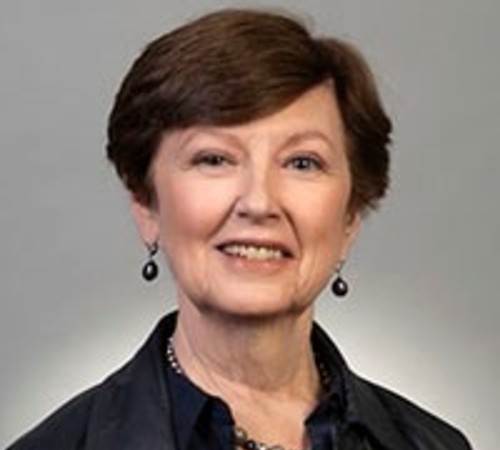
Margaret (Peggy) O'Kane, retiring president of the NCQA. Photo courtesy NCQA.
As a result, she says, the nation’s healthcare ecosystem is fractured, siloed and ineffective.
“Every country in the world that has superior healthcare than ours and that costs less, they all build on a base of primary care,” she said. “Primary care doctors are emphasized and supported and paid more, but in the U.S. they’re at the bottom of the pecking order.”
O’Kane’s contention is that health systems and hospitals who spend all their time and money on the fancy stuff are ignoring the connection to primary care that can set a solid foundation for care management and coordination. Using tech to bolster the PCP gives that doctor more opportunities to treat patients, moving them on to more advanced care only when necessary.
They “act as a watcher of resource allocation,” she adds, helping to reduce unnecessary costs and adverse health outcomes by managing the patient journey. And by doing so, they can help health system and hospital leaders reduce unnecessary traffic to specialists and ED visits, cutting down on waste
But while O’Kane says healthcare executives should invest in technology that supports the primary care provider, there’s another problem with the healthcare industry that affects outcomes: The payment structure isn’t aligned to support PCP care.
“If you become more efficient at delivering high-quality healthcare, chances are that in the conventional payment model you will lose money because you’ll avoid hospitalizations,” she says. “You’ll avoid complications that may lead to expensive – read, profitable – things for the entity that’s delivering them. So I think we’re reaching a point of crisis.”
O’Kane feels that the industry is focused too much on making sure people are covered by insurance, and not focused enough on improving care management and coordination so that insurance costs can be reduced.
“We have an organization where if I just kind of push you through your period of being enrolled with me without adding any value to the care that you're getting, then it's somebody else's problem,” she says. “And at the end of the day it winds up being Medicare's problem, because people were stinting on things that actually improved care.”
There’s a “lack of motivation,” she says, to make those changes and affect change management.
“I think we really need to go after the payment model,” O’Kane concludes. “I don't see that happening without some push. And because we're in this generalized crisis, I think people are too worried about keeping people covered at the moment.”
Eric Wicklund is the Associate Content Manager and Senior Editor for Innovation and Technology at HealthLeaders.
KEY TAKEAWAYS
Peggy O’Kane is retiring at the end of this year after 35 years at the head of the NCQA
O’Kane says the primary care provider is vastly overlooked in today’s disjointed and ineffective healthcare ecosystem, resulting in wasted money and services and poor quality outcomes.
By investing in technology that promotes primary care and makes the PCP the care coordinator for patients, health systems and hospitals will see far less unnecessary specialist and ED visits and fewer patients with preventable health issues.