
A key capability of the registry is predicting the risk of adverse events during transcatheter-based procedures on pediatric patients.
The Catheterization RISk in Pediatrics (CRISP) registry at Joe DiMaggio Children's Hospital helps guide the treatment plans of interventional cardiologists performing transcatheter-based procedures on congenital heart patients.
The CRISP registry was founded in 2007 by Thomas Forbes, MD. In 2022, Forbes brought the registry to Joe DiMaggio Children's Hospital, which is part of Memorial Healthcare System. The CRISP registry features a database of more than 10,000 procedures performed at nearly two dozen congenital cardiac centers in the United States. The registry collects data about pediatric patients who undergo cardiac catheterization.
"Participating institutions enter patient data and conditions into the database," says Forbes, who serves as chief of pediatric cardiac services at Joe DiMaggio Children's Hospital. "We take that data and note adverse events that occur during catheterization procedures."
Information collected in the database includes patient demographic data such as age and weight, patient circumstances such as whether a patient is on a ventilator, and types of patient procedures such as diagnostic heart catheterization. The data is then used to create a point system that produces a risk score for patients undergoing certain types of procedures in a cath lab.
"The risks include major events such as death, a major arrythmia, or perforation," Forbes says. "We can predict the risks for a certain patient based on factors such as demographics and conditions."
The CRISP registry predictive capability helps guide care teams, according to Forbes.
"The care team that works in the cath lab has the risk score and the kinds of complications that could occur before they perform a procedure on a patient," Forbes says. "For high-risk patients, who have up to a 30% chance of experiencing a complication, we can have surgical backup in place in case an adverse event occurs."
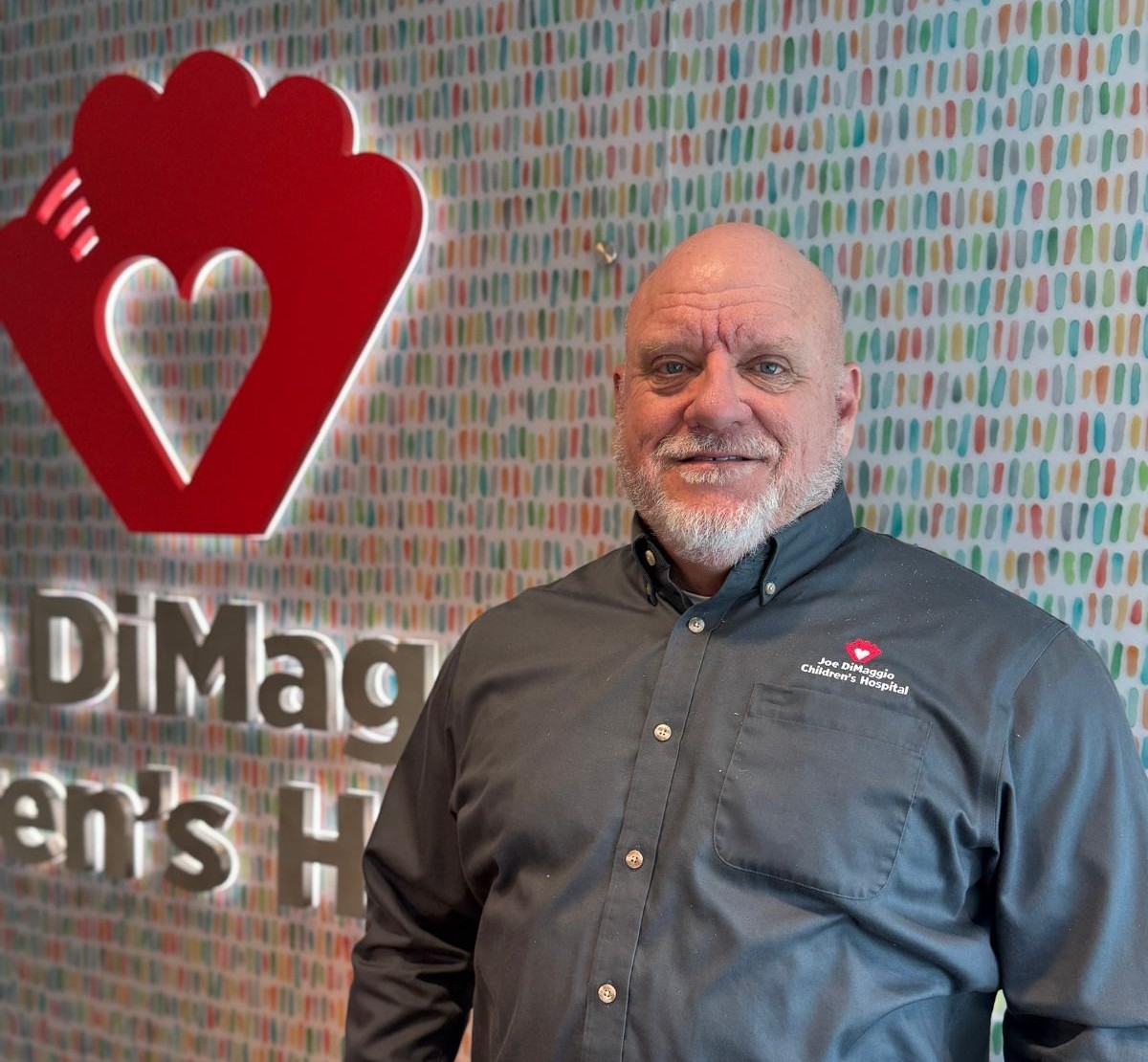
Ronald Ford, MD, MBA, is CMO of Joe DiMaggio Children's Hospital. Photo courtesy of Memorial Healthcare System.
Valuable Resource for Hospital CMOs
The CRISP registry helps hospitals provide safe cardiovascular care for pediatric patients, according to Ronald Ford, MD, MBA, CMO of Joe DiMaggio Children's Hospital.
"CMOs are ultimately responsible for the safety of procedures performed within their institutions, and the CRISP registry's data allows our interventionists to perform extremely high-risk procedures on acutely ill patients knowing they are fully aware of potentially challenging situations," Ford says.
The CRISP registry also helps hospitals determine the kind of surgery that should be performed on a case-by-case basis, Ford explains.
"There's peace-of-mind knowing there's an objective perspective helping determine whether the riskiest cases are better resolved in the cath lab, through collaboration between an interventionalist and a surgeon, or with traditional surgery," Ford says.
The ability of the CRISP registry to predict the likelihood of an adverse event is highly valuable, according to Ford.
"It allows our teams to be proactive when it comes to safety and develop protocols that address likely situations that may arise in cath lab procedures, so that speaks to the safety and quality we all crave," Ford says. "Maybe that means they take an alternate approach that helps them avoid, or at least mitigate, complications during the complex procedures they perform."
 Thomas Forbes, MD, is chief of pediatric cardiac services at Joe DiMaggio Children's Hospital. Photo courtesy of Memorial Healthcare System.
Speeding Up Approval of Medical Devices
In addition to boosting patient safety, the CRISP registry has increased the speed of Food and Drug Administration (FDA) approval of medical devices for pediatric patients.
One of the challenges in pediatric cardiology is that few medical devices are developed for pediatric patients mainly due to financial cost.
"Clinical trials for devices developed for adults cost tens of millions of dollars, but the return on investment for those trials is good for the medical device companies because there are high patient volumes," Forbes says. "That is not the case in pediatrics, where very few devices are used and there are high-risk patients."
The FDA has used the CRISP registry as a valuable research tool, according to Forbes.
"The FDA can use information from our database retrospectively and see whether new devices are safe," Forbes says. "Instead of using prospective data from randomized clinical trials, the FDA can use retrospective data from our database to approve devices used in pediatric cardiology."
Joe DiMaggio Children's Hospital patients have benefitted from the CRISP registry's role in the development of medical devices for pediatric patients, Ford explains.
"At Joe DiMaggio Children's Hospital, the registry has enabled us to be part of the majority of U.S. clinical trials, allowing us to enroll our kids and for them to have access to state-of-the-art equipment," Ford says. "It's certainly a benefit to them having testing done here and makes us a magnet for pediatric cardiovascular research that advances clinical care."
Christopher Cheney is the CMO editor at HealthLeaders.
KEY TAKEAWAYS
The registry collects key patient information, including patient demographic data such as age and weight as well as types of patient procedures such as diagnostic heart catheterization.
By predicting the likelihood of adverse events, the registry helps guide care teams such as putting surgical backup in place in case an adverse event occurs.
Information from the registry is helping the Food and Drug Administration to speed up the approval of medical devices for pediatric patients.