Rethinking ASC Growth: Why Data Integration is the Key to Scale
While the ASC market presents enormous opportunities, a recent Vizient survey underscores a critical obstacle: data fragmentation and technology gaps are the biggest barriers to sustainable growth.
In this April 2025 Fact File, learn the importance of data integration for growth and organizational success.
Navigating the shift to ambulatory surgery centers
January 2025
Surgical procedures continue to shift towards outpatient settings. By 2034, outpatient surgery rates are projected to grow by 19%, compared to just 3% for inpatient surgeries.
As more surgeries are performed in freestanding ambulatory surgery centers (ASCs), hospital leaders must achieve the right balance to capture market share without cannibalizing their existing volume and profit margins.
Read the latest fact file to learn how to shift to ambulatory surgery centers!
Achieving greater financial sustainability in your cardiovascular service line
With a growing percentage of the U.S. population being diagnosed with cardiovascular disease, healthcare providers are preparing their organizations to meet the escalating demand for care and the financial impact that will come with it.
The most common type of cardiovascular disease is coronary artery disease (CAD), occurring when a coronary artery is narrowed by plaque buildup that severely restricts blood flow and oxygen delivery to the heart muscle. Revascularization strategies consist of two main techniques: percutaneous coronary intervention (PCI) and coronary artery bypass grafting (CABG).
By 2025 45 million Americans will have cardiovascular disease, learn how to achieve greater financial sustainability in your cardiovascular service line by downloading the latest Fact File!
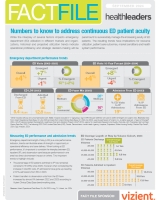
Numbers to know to address continuous ED patient acuity
At initial observation, virtual health visits seem to have stabilized, accounting for about 10% of all evaluation and management (E&M) visits conducted virtually. However, a closer look reveals a more complex picture, characterized by regional differences, variations across service lines, the impact of new market entrants, and ongoing expansion.
Integrating virtual visits into a hybrid care model is a crucial strategy for future growth and improving patient flow, particularly in the face of a changing competitive environment.
Download the August HealthLeaders Fact File to learn more!